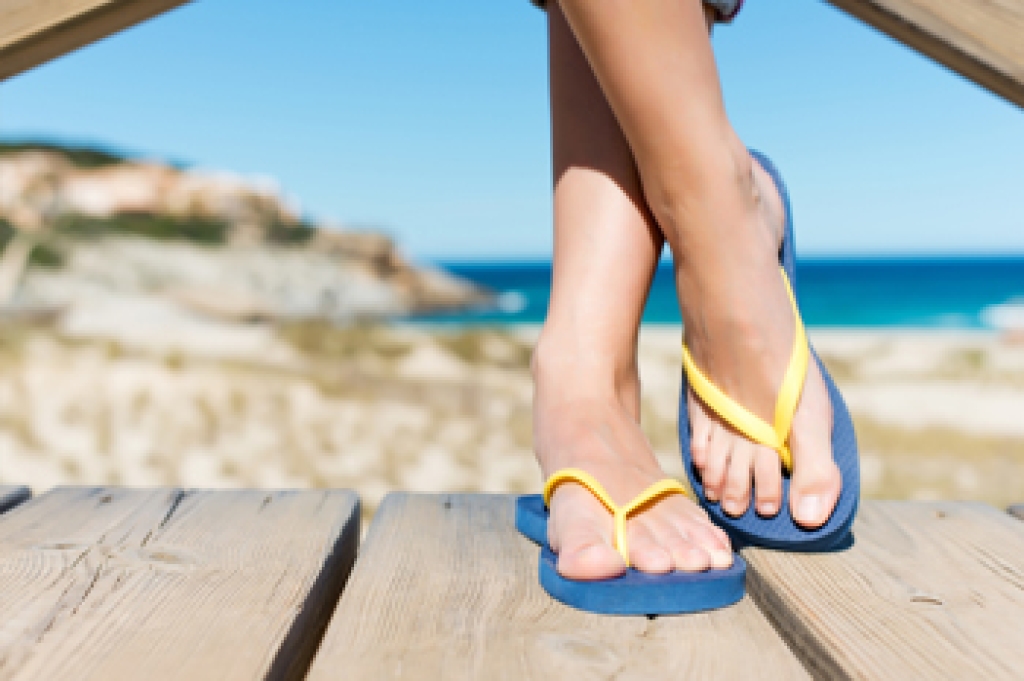
What You Should Know Before Wearing Flip-Flops

Flip-flops are a popular choice for warm weather because they are lightweight and easy to wear. Although they are convenient, they are not designed to provide the same support as well-made walking shoes. Most flip-flops have thin soles and very little arch support. They also require the toes to grip the sandal while walking, which can place extra strain on the muscles and tendons of the foot. Wearing flip-flops for long periods of time can increase the risk of heel pain, arch pain, and tendon irritation. They also provide very little protection from sharp objects or uneven ground. Patients who already have bunions, flat feet, or plantar fasciitis can notice that their symptoms become worse when wearing flip-flops too frequently.

A podiatrist can evaluate foot pain that develops after wearing flip-flops and determine whether another condition is responsible for the discomfort. The examination includes checking foot alignment, flexibility, and muscle strength. The podiatrist also observes how the patient stands and walks to identify movement problems that increase stress on the feet. Shoes that lack proper support can change the way the foot moves and place extra pressure on the heel, arch, and toes. A complete evaluation helps identify the source of the pain and allows the podiatrist to recommend the most appropriate treatment. Early diagnosis can help prevent minor problems from becoming more serious.

Treatment depends on the patient's symptoms and the condition affecting the foot. A podiatrist can recommend shoes that provide better support for daily activities while reducing unnecessary strain on the feet. Care also includes custom orthotics that improve foot alignment and distribute pressure more evenly. Patients with ongoing pain can benefit from stretching and strengthening exercises that improve stability and flexibility. In rare cases, severe damage to tendons or joints can require surgery to restore normal foot function. If you have foot pain related to wearing flip-flops, it is suggested that you schedule an appointment with a podiatrist for a diagnosis and appropriate treatment.

Flip-flops can cause a lot of problems for your feet. If you have any concerns about your feet or ankles, contact John Mccain, DPM from Advanced Foot & Ankle Specialists, PA. Our doctor will assist you with all of your foot and ankle needs.

Flip-Flops and Feet

Flip-flops have managed to become a summer essential for a lot of people. While the shoes may be stylish and easy to slip on and off, they can be dangerous to those who wear them too often. These shoes might protect you from fungal infections such as athlete’s foot, but they can also give you foot pain and sprained ankles if you trip while wearing them.

When Are They Okay to Wear?

Flip-flops should only be worn for very short periods of time. They can help protect your feet in places that are crawling with fungi, such as gym locker rooms. Athlete’s foot and plantar warts are two common fungi that flip-flops may help protect your feet against.

Why Are They Bad for My Feet?

These shoes do not offer any arch support, so they are not ideal for everyday use. They also do not provide shock absorption or heel cushioning which can be problematic for your feet. Additionally, you may suffer from glass cuts, puncture wounds, and stubbed toes since they offer little protection for your feet.

More Reasons Why They Are Bad for Your Feet

  • They Slow You Down
  • May Cause Blisters and Calluses
  • Expose Your Feet to Bacteria

If you have any questions, please feel free to contact one of our offices located in Stuart and Jupiter, FL . We offer the newest diagnostic and treatment technologies for all your foot care needs.

Read more about Flip Flops and Your Feet

Get Professional Care for a Broken Foot or Ankle

Constant care and regular evaluation are important for a foot or ankle fracture. If left untreated, foot or ankle fractures can worsen over time and create more serious problems.

Don't wait to be examined if you believe you've experienced a foot or ankle fracture.

Foot Health Concerns in Older Adults and How They Affect Mobility

Foot problems in older adults are common and can significantly impact mobility and quality of life. As the body ages, natural changes in skin, joints, and circulation increase the risk of developing foot conditions. Elderly foot problems often include corns, toenail disorders, and hammertoe deformities. These conditions may seem minor at first but can lead to pain, instability, and reduced independence if not addressed early.

Symptoms vary depending on the condition but often include pain, swelling, and visible deformities. Corns appear as thickened areas of skin caused by repeated pressure or friction. Toenail disorders may include thickened, discolored, or brittle nails that are difficult to manage. Bunions present as a bony bump at the base of the big toe, while hammertoe involves an abnormal bending of the smaller toes. Weakness, frailty, and balance difficulties are also common, increasing the risk of falls.


Risk factors include aging-related joint changes, reduced muscle strength, and poor circulation. Wearing ill- fitting shoes can worsen pressure points and contribute to deformities. Chronic conditions like arthritis and diabetes may further impact foot health. Limited flexibility and decreased sensation can make it harder to detect early signs of injury or irritation, allowing problems to progress. Preventive care and early treatment are essential for maintaining mobility. Wearing properly fitted, supportive shoes reduces pressure and improves balance. Regular foot inspections help identify changes before they worsen. Routine nail care and skin maintenance are also important. Strengthening and balance exercises can improve stability and reduce fall risk. If you are elderly and have developed foot problems, it is suggested that you consult a podiatrist for an accurate diagnosis and appropriate treatment.

Proper foot care is something many older adults forget to consider. If you have any concerns about your feet and ankles, contact John Mccain, DPM from Advanced Foot & Ankle Specialists, PA. Our doctor can provide the care you need to keep you pain-free and on your feet.

The Elderly and Their Feet

As we age we start to notice many changes in our body, but the elder population may not notice them right away. Medical conditions may prevent the elderly to take notice of their foot health right away. Poor vision is a lead contributor to not taking action for the elderly.

Common Conditions 

  • Neuropathy – can reduce feeling in the feet and can hide many life-threatening medical conditions.
  • Reduced flexibility – prevents the ability of proper toenail trimming, and foot cleaning. If left untreated, it may lead to further medical issues.
  • Foot sores – amongst the older population can be serious before they are discovered. Some of the problematic conditions they may face are:
  • Gouging toenails affecting nearby toe
  • Shoes that don’t fit properly
  • Pressure sores
  • Loss of circulation in legs & feet
  • Edema & swelling of feet and ankles

Susceptible Infections

Diabetes and poor circulation can cause general loss of sensitivity over the years, turning a simple cut into a serious issue.

If you have any questions, please feel free to contact one of our offices located in Stuart and Jupiter, FL . We offer the newest diagnostic and treatment technologies for all your foot care needs.
Read more about Taking Care of Elderly Feet

Athlete’s Foot and When to See a Podiatrist

Athlete’s foot, also known as tinea pedis, is a common fungal infection that affects the skin on the feet. Despite its name, athlete’s foot can develop in anyone, not just athletes. The infection thrives in warm, moist environments and often spreads through direct contact with contaminated surfaces. Athlete’s foot commonly affects the skin between the toes, but it can also appear on the soles, sides, or tops of the feet. Symptoms may include itching, burning, redness, peeling skin, and cracking. In some cases, the affected skin may become dry, flaky, or painful, making everyday activities uncomfortable.


Because athlete’s foot is contagious, it can spread from one area of the foot to another or even to other parts of the body. If left untreated, the infection may worsen and increase the risk of secondary skin infections. Some people experience recurring athlete’s foot, especially if the underlying causes are not addressed. The condition can sometimes be mistaken for eczema, psoriasis, or other skin disorders, which is why an accurate diagnosis is important. Persistent foot itching, skin irritation, and changes in the appearance of the skin should not be ignored, particularly when symptoms continue to worsen or interfere with daily activities.


A podiatrist is a foot and ankle specialist who can diagnose and treat athlete’s foot and other foot skin conditions. During an evaluation, a podiatrist can determine whether symptoms are caused by a fungal infection or another condition requiring different treatment. Professional care may include prescription-strength antifungal medications and recommendations designed to help prevent the infection from returning. Early treatment can help reduce discomfort and limit the spread of the infection. If you are experiencing foot itching, peeling skin, redness, or persistent symptoms that may be related to athlete’s foot, it is suggested that you consult a podiatrist for an evaluation and appropriate treatment options.

Athlete’s Foot

Athlete’s foot is often an uncomfortable condition to experience. Thankfully, podiatrists specialize in treating athlete’s foot and offer the best treatment options. If you have any questions about athlete’s foot, consult with John Mccain, DPM from Advanced Foot & Ankle Specialists, PA. Our doctor will assess your condition and provide you with quality treatment.

What Is Athlete’s Foot?

Tinea pedis, more commonly known as athlete’s foot, is a non-serious and common fungal infection of the foot. Athlete’s foot is contagious and can be contracted by touching someone who has it or infected surfaces. The most common places contaminated by it are public showers, locker rooms, and swimming pools. Once contracted, it grows on feet that are left inside moist, dark, and warm shoes and socks.

Prevention

The most effective ways to prevent athlete’s foot include:

  • Thoroughly washing and drying feet
  • Avoid going barefoot in locker rooms and public showers
  • Using shower shoes in public showers
  • Wearing socks that allow the feet to breathe
  • Changing socks and shoes frequently if you sweat a lot

Symptoms

Athlete’s foot initially occurs as a rash between the toes. However, if left undiagnosed, it can spread to the sides and bottom of the feet, toenails, and if touched by hand, the hands themselves. Symptoms include:

  • Redness
  • Burning
  • Itching
  • Scaly and peeling skin

Diagnosis and Treatment

Diagnosis is quick and easy. Skin samples will be taken and either viewed under a microscope or sent to a lab for testing. Sometimes, a podiatrist can diagnose it based on simply looking at it. Once confirmed, treatment options include oral and topical antifungal medications.

If you have any questions, please feel free to contact one of our offices located in Stuart and Jupiter, FL . We offer the newest diagnostic and treatment technologies for all your foot care needs.
Read more about How to Deal with Athlete's Foot

What Is the Connection Between Heel Spurs and Plantar Fasciitis?

Heel spurs are bony growths that develop on the underside or back of the heel bone. They form after long-term stress, where muscles, tendons, or ligaments attach to the bone. A ligament is a strong band of tissue that connects one bone to another. Many heel spurs develop along with plantar fasciitis, which is irritation of the thick band of tissue that supports the arch of the foot. Some people have heel spurs without pain, while others feel sharp discomfort when standing or walking. Pain is frequently worse after getting out of bed or after sitting for a long period of time. Shoes that lack proper support, repeated strain, and excess body weight can increase the risk of developing a heel spur.

A podiatrist can determine whether a heel spur is causing your symptoms or whether another foot problem is responsible. The examination includes checking the location of the pain, your foot structure, and the way you walk. X-rays can show the presence of a heel spur and help rule out other conditions. Although the spur is easy to see on an X-ray, the surrounding soft tissue is frequently the source of the pain. Identifying the exact cause is important because treatment should focus on relieving the irritated tissue as well as reducing stress on the heel.

Treatment depends on the severity of the pain and the underlying condition. A podiatrist can recommend custom orthotics, supportive padding, or shoes that provide proper support to reduce pressure on the heel. Additional treatment includes anti-inflammatory medication, or corticosteroid injections to reduce pain and irritation. For patients with long-lasting symptoms that do not improve with other treatments, surgery can remove the heel spur or release the tight tissue causing the pain. Early evaluation helps prevent worsening discomfort and supports better movement. If you have symptoms of heel spurs, it is suggested that you schedule an appointment with a podiatrist for an accurate diagnosis and appropriate treatment.

Heel spurs can be incredibly painful and sometimes may make you unable to participate in physical activities. To get medical care for your heel spurs, contact John Mccain, DPM from Advanced Foot & Ankle Specialists, PA. Our doctor will do everything possible to treat your condition.

Heels Spurs

Heel spurs are formed by calcium deposits on the back of the foot where the heel is. This can also be caused by small fragments of bone breaking off one section of the foot, attaching onto the back of the foot. Heel spurs can also be bone growth on the back of the foot and may grow in the direction of the arch of the foot.

Older individuals usually suffer from heel spurs and pain sometimes intensifies with age. One of the main condition's spurs are related to is plantar fasciitis.

Pain

The pain associated with spurs is often because of weight placed on the feet. When someone is walking, their entire weight is concentrated on the feet. Bone spurs then have the tendency to affect other bones and tissues around the foot. As the pain continues, the feet will become tender and sensitive over time.

Treatments

There are many ways to treat heel spurs. If one is suffering from heel spurs in conjunction with pain, there are several methods for healing. Medication, surgery, and herbal care are some options.

If you have any questions, please feel free to contact one of our offices located in Stuart and Jupiter, FL . We offer the newest diagnostic and treatment technologies for all your foot care needs.

Read more about Heel Spurs
Advanced Podiatric Procedures & Services in the