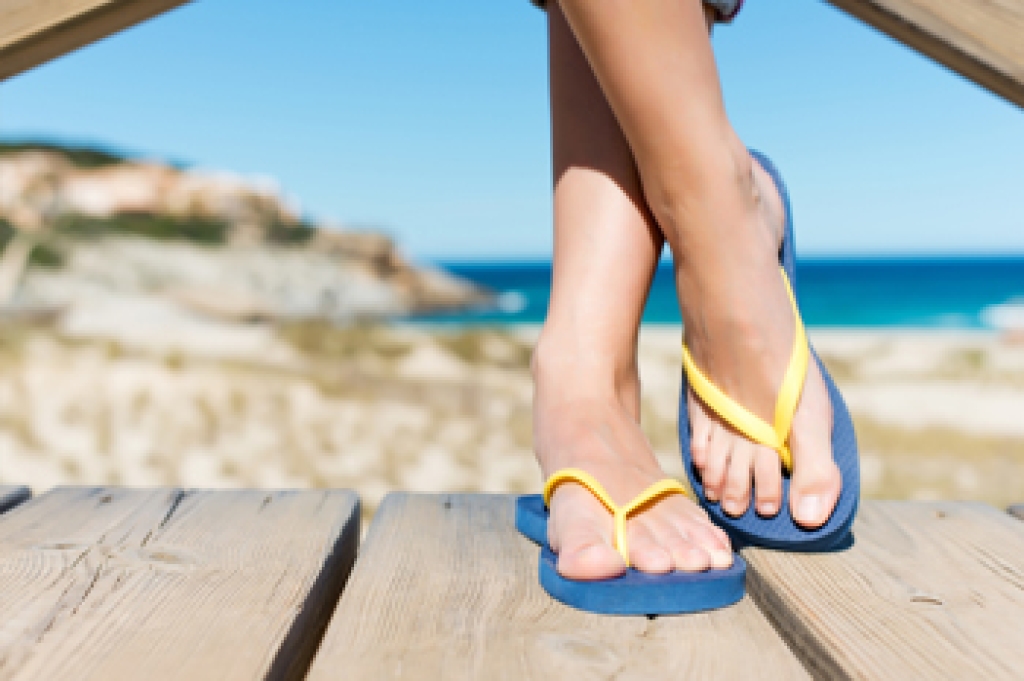
Flip-flops are a popular choice for warm weather because they are lightweight and easy to wear. Although they are convenient, they are not designed to provide the same support as well-made walking shoes. Most flip-flops have thin soles and very little arch support. They also require the toes to grip the sandal while walking, which can place extra strain on the muscles and tendons of the foot. Wearing flip-flops for long periods of time can increase the risk of heel pain, arch pain, and tendon irritation. They also provide very little protection from sharp objects or uneven ground. Patients who already have bunions, flat feet, or plantar fasciitis can notice that their symptoms become worse when wearing flip-flops too frequently.
A podiatrist can evaluate foot pain that develops after wearing flip-flops and determine whether another condition is responsible for the discomfort. The examination includes checking foot alignment, flexibility, and muscle strength. The podiatrist also observes how the patient stands and walks to identify movement problems that increase stress on the feet. Shoes that lack proper support can change the way the foot moves and place extra pressure on the heel, arch, and toes. A complete evaluation helps identify the source of the pain and allows the podiatrist to recommend the most appropriate treatment. Early diagnosis can help prevent minor problems from becoming more serious.
Treatment depends on the patient's symptoms and the condition affecting the foot. A podiatrist can recommend shoes that provide better support for daily activities while reducing unnecessary strain on the feet. Care also includes custom orthotics that improve foot alignment and distribute pressure more evenly. Patients with ongoing pain can benefit from stretching and strengthening exercises that improve stability and flexibility. In rare cases, severe damage to tendons or joints can require surgery to restore normal foot function. If you have foot pain related to wearing flip-flops, it is suggested that you schedule an appointment with a podiatrist for a diagnosis and appropriate treatment.
Flip-flops can cause a lot of problems for your feet. If you have any concerns about your feet or ankles, contact John Mccain, DPM from Advanced Foot & Ankle Specialists, PA. Our doctor will assist you with all of your foot and ankle needs.
Flip-Flops and Feet
Flip-flops have managed to become a summer essential for a lot of people. While the shoes may be stylish and easy to slip on and off, they can be dangerous to those who wear them too often. These shoes might protect you from fungal infections such as athlete’s foot, but they can also give you foot pain and sprained ankles if you trip while wearing them.
When Are They Okay to Wear?
Flip-flops should only be worn for very short periods of time. They can help protect your feet in places that are crawling with fungi, such as gym locker rooms. Athlete’s foot and plantar warts are two common fungi that flip-flops may help protect your feet against.
Why Are They Bad for My Feet?
These shoes do not offer any arch support, so they are not ideal for everyday use. They also do not provide shock absorption or heel cushioning which can be problematic for your feet. Additionally, you may suffer from glass cuts, puncture wounds, and stubbed toes since they offer little protection for your feet.
More Reasons Why They Are Bad for Your Feet
- They Slow You Down
- May Cause Blisters and Calluses
- Expose Your Feet to Bacteria
If you have any questions, please feel free to contact one of our offices located in Stuart and Jupiter, FL . We offer the newest diagnostic and treatment technologies for all your foot care needs.
