
Inspect Your Feet Regularly for Abnormalities if You're Diabetic


Diabetic patients often have decreased sensitivity in their feet, which makes a visual inspection of the feet even more important. If you're diabetic, having periodic screenings is extremely important for maintaining the overall health of your feet.
Let the Expert Treat Your Ingrown Toenails


Ingrown toenails can be painful and can make wearing shoes or walking uncomfortable. Seek professional help if you believe you've developed an ingrown toenail and be treated safely.
Types of Ankle Sprains
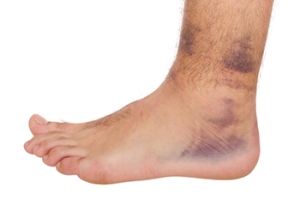

An ankle sprain is a common injury that occurs when the ligaments supporting the ankle stretch or tear. The two main types are inversion sprains, which happen when the foot rolls inward and affect the ligaments on the outer ankle, and eversion sprains, which occur when the foot rolls outward and strain the inner ligaments. These injuries often result from sudden twisting motions, uneven surfaces, sports activities, or missteps. Symptoms may include pain, swelling, bruising, and difficulty bearing weight. A podiatrist can assess the severity of the sprain, provide targeted treatment, and create a rehabilitation plan to restore strength and stability. If you think you have sprained your ankle, it is suggested that you consult a podiatrist who can offer you effective treatment solutions to ensure proper healing.
Although ankle sprains are common, they aren’t always minor injuries. If you need your ankle injury looked at, contact John Mccain, DPM from Advanced Foot & Ankle Specialists, PA. Our doctor can provide the care you need to keep you pain-free and on your feet.
How Does an Ankle Sprain Occur?
Ankle sprains are the result of a tear in the ligaments within the ankle. These injuries may happen when you make a rapid shifting movement while your foot is planted. A less common way to sprain your ankle is when your ankle rolls inward while your foot turns outward.
What Are the Symptoms?
- Pain at the sight of the tear
- Bruising/Swelling
- Ankle area is tender to touch
- In severe cases, may hear/feel something tear
- Skin discoloration
Preventing a Sprain
- Wearing appropriate shoes for the occasion
- Stretching before exercises and sports
- Knowing your limits
Treatment of a Sprain
In many cases, the RICE method (Rest, Ice, Compression, and Elevate) is used to treat ankle sprains. However, you should see a podiatrist to see which treatment option would work best with your injury. In severe cases, surgery may be required.
It is important to ask your doctor about rehab options after you receive treatment for your injury. Stretching, strength training, and balance exercises may help the ankle heal while also preventing further injury.
If you have any questions, please feel free to contact one of our offices located in Stuart and Jupiter, FL . We offer the newest diagnostic and treatment technologies for all your foot care needs.
Ankle Sprains
Ankle sprains occur when ligaments that support the ankle stretch beyond their limits and tear. These types of injuries are very common and can occur in people of all ages. Sprains may range from mild to severe, depending on how much damage is done to the ligaments. If a sprain goes untreated, a more severe sprain may occur which can further damage the ankle. Repeated ankle sprains can lead to chronic ankle pain.
There are some risk factors that can increase your risk of suffering a sprained ankle. Those who participate in sports, walk on uneven surfaces, have a prior ankle injury, are in poor physical condition, or wear improper shoes are more likely to get a sprained ankle.
There are a few symptoms to look out for if you suspect you are suffering from a sprained ankle. Some common symptoms are swelling, bruising, tenderness, and instability of the ankle. In cases where the tearing of the ligaments is severe, there may be a “popping” sound when the strain occurs.
The RICE method is proven to be effective in treating ankle sprains. RICE stands for Rest, Ice, Compression, and Elevation. Rest is important for treatment, especially within the first 24 to 48 hours. You should also ice your sprained ankle for the first 48 hours for 20 minutes at a time. A small piece of cloth should be placed between the ice and the affected area. For the compression step, you should wear a brace that is snug, but not too tight that it cuts off circulation. When choosing a brace, be sure to choose one that is suitable for the type of ankle sprain you have. Lastly, you should elevate your foot above the heart as often as possible.
After you treat a sprain, you should go through rehabilitation to prevent the injury from occurring again. There are three phases to the rehab process. The first phase involves resting, protecting, and reducing the swelling of the injury. The second phase consists of restoring the ankle’s flexibility, range of motion, and strength. The third phase consists of slowly returning to activity and maintenance exercises.
If you suspect you have an ankle sprain, you shouldn’t hesitate to consult with your podiatrist. Your podiatrist will be able to give you a proper diagnosis and a suitable treatment option for your condition.
Choosing the Best Running Shoe for Comfort and Performance


Choosing the right running shoe can prevent discomfort and support your training goals. Many runners benefit from selecting a shoe that is a half size or even a full size larger than their regular shoes to allow room for swelling and natural foot movement. It is important to know your running goals, whether you want support for long distances or speed for short runs. Look for materials that enhance comfort such as air pockets for cushioning, foam for softness, and gel for shock absorption. Additionally, replace your shoes regularly to maintain proper support. A podiatrist can assess your foot type, gait, and training needs to recommend the right shoe. If you have foot or ankle pain from wearing the wrong shoes, it is suggested that you consult a podiatrist who can treat various foot conditions, and guide you on additional tips in choosing the right running shoe for your goals.
You should always make sure your running shoes fit properly in order to avoid injury. For more information, contact John Mccain, DPM from Advanced Foot & Ankle Specialists, PA. Our doctor can provide the care you need to keep you pain-free and on your feet.
Choosing the Right Running Shoe for Your Foot Type
Improper shoe sizing can cause a myriad of problems for your feet. Shoes that don’t fit you properly can lead to muscular imbalances in your body, which can result in foot, knee, and hip injuries.
Tips for Finding the Right Running Shoe
- Make sure you have a thumb’s width of wiggle room between the end of your longest toe and the front of the shoe.
- There should be little to no slipping at the heel
- Don’t assume your size in one shoe brand will be your size in another
- Do not lace up your shoes too tightly
- Walk around in the store with your new shoes before you buy them
If you have any questions, please feel free to contact one of our offices located in Stuart and Jupiter, FL . We offer the newest diagnostic and treatment technologies for all your foot care needs.
Walking Shoes vs. Running Shoes
Although walking shoes and running shoes look similar, they have characteristics that make them different from each other. Runners should avoid running in walking shoes and vice versa. It is very important that you wear the proper footwear for the activity you are going to partake in, for you to avoid injury.
If you are looking to buy a new pair of running shoes, there are certain things you should look out for. One of the main components that makes up a good running shoe is flexibility. You should be able to bend and flex the forefoot of the shoe that you are purchasing. If you can bend the entire shoe in half with ease, this is a sign that the shoe does not have enough structure for your feet. Another feature you should look for is a low heel. Certain running shoes have a low heel to support runners who land on the ball of their feet. Lastly, you should look for the fit of the running shoe. You should visit the best running shoe store in your area to have your feet properly sized for the shoes in the store. Usually, the staff will be able to help recommend the best type of running shoe for your needs.
When you are walking, the body’s weight is evenly distributed on the foot. This influences the design of shoes made for walking. If you are looking to buy a pair of walking shoes, there are different features you should look for to determine which pair of shoes is best for you. Walking shoes should be flexible through the ball of the foot to allow for a greater range of motion through the roll of the forefoot. These shoes also should have greater arch support for the foot. If you plan on walking long distances or on hard surfaces, it is best that you wear shoes that have cushioning.
When trying on a new pair of shoes, the heel should fit snugly without slip. You should shop for shoes after a long walk, since your feet tend to swell throughout the day. Many people have one foot that is a different size than the other, so it is best that you have both feet measured when looking for your true size. You should also beware that sizes vary depending on the shoe brand. A certain size in one brand may be a different size in a different brand. Lastly, you should always walk around in shoes that you plan on buying. This will help you determine whether the shoes are comfortable and if they fit well on your feet.
Always look for good shoe construction when shopping for new sneakers. The upper part of the shoe should allow for adjustment through laces or straps. If you need help with shoe sizing or if you need custom orthotics for your feet, you should make an appointment with your podiatrist for assistance. He or she will be more than happy to help you with your shoe sizing needs.
The Painful Bump of a Bunionette
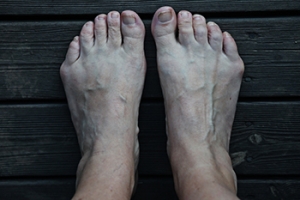

A bunionette, also known as a tailor’s bunion, is a bony bump that forms on the outside of the foot near the base of the little toe. It develops when the fifth metatarsal bone shifts outward while the toe moves inward. This is often due to inherited foot structure, poor footwear choices, or repetitive pressure on the side of the foot. Symptoms include redness, swelling, and pain, especially when wearing tight or narrow shoes. The area may appear raised and tender, and the skin can become irritated or callused. Walking or standing for long periods may worsen the discomfort. A podiatrist can diagnose a bunionette through physical examination and imaging to assess the alignment of the bones. Treatment may include shoe modifications, padding, custom orthotics, and anti-inflammatory measures. In more severe cases, surgery may be needed to correct the deformity. If you notice a painful bump near your little toe, it is suggested that you make an appointment with a podiatrist for help.
If you are suffering from bunion pain, contact John Mccain, DPM of Advanced Foot & Ankle Specialists, PA. Our doctor can provide the care you need to keep you pain-free and on your feet.
What Is a Bunion?
Bunions are painful bony bumps that usually develop on the inside of the foot at the joint of the big toe. As the deformity increases over time, it may become painful to walk and wear shoes. Women are more likely to exacerbate existing bunions since they often wear tight, narrow shoes that shift their toes together. Bunion pain can be relieved by wearing wider shoes with enough room for the toes.
Causes
- Genetics – some people inherit feet that are more prone to bunion development
- Inflammatory Conditions - rheumatoid arthritis and polio may cause bunion development
Symptoms
- Redness and inflammation
- Pain and tenderness
- Callus or corns on the bump
- Restricted motion in the big toe
In order to diagnose your bunion, your podiatrist may ask about your medical history, symptoms, and general health. Your doctor might also order an x-ray to take a closer look at your feet. Nonsurgical treatment options include orthotics, padding, icing, changes in footwear, and medication. If nonsurgical treatments don’t alleviate your bunion pain, surgery may be necessary.
If you have any questions, please feel free to contact one of our offices located in Stuart and Jupiter, FL . We offer the newest diagnostic and treatment technologies for all your foot care needs.
Bunions
A bunion is an enlargement of the base joint of the toe that connects to the foot, often formed from a bony growth or a patch of swollen tissues. It is caused by the inward shifting of the bones in the big toe, toward the other toes of the foot. This shift can cause a serious amount of pain and discomfort. The area around the big toe can become inflamed, red, and painful.
Bunions are most commonly formed in people who are already genetically predisposed to them or other kinds of bone displacements. Existing bunions can be worsened by wearing improperly fitting shoes. Trying to cram your feet into high heels or running or walking in a way that causes too much stress on the feet can exacerbate bunion development. High heels not only push the big toe inward, but shift one's body weight and center of gravity towards the edge of the feet and toes, expediting bone displacement.
A podiatrist knowledgeable in foot structure and biomechanics will be able to quickly diagnose bunions. Bunions must be distinguished from gout or arthritic conditions, so blood tests may be necessary. The podiatrist may order a radiological exam to provide an image of the bone structure. If the x-ray demonstrates an enlargement of the joint near the base of the toe and a shifting toward the smaller toes, this is indicative of a bunion.
Wearing wider shoes can reduce pressure on the bunion and minimize pain, and high heeled shoes should be eliminated for a period of time. This may be enough to eliminate the pain associated with bunions; however, if pain persists, anti-inflammatory drugs may be prescribed. Severe pain may require an injection of steroids near the bunion. Orthotics for shoes may be prescribed which, by altering the pressure on the foot, can be helpful in reducing pain. These do not correct the problem; but by eliminating the pain, they can provide relief.
For cases that do not respond to these methods of treatment, surgery can be done to reposition the toe. A surgeon may do this by taking out a section of bone or by rearranging the ligaments and tendons in the toe to help keep it properly aligned. It may be necessary even after surgery to wear more comfortable shoes that avoid placing pressure on the toe, as the big toe may move back to its former orientation toward the smaller toes.
Podiatric Treatment for Ingrown Toenails
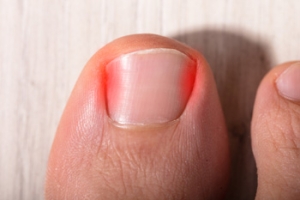

Ingrown toenails occur when the edge of the nail grows into the surrounding skin, causing pain, redness, and swelling. If left untreated, the area can become infected and make walking uncomfortable. Podiatrists are specially trained to manage this condition safely and effectively. Treatment depends on the severity of the problem. In mild cases, the nail edge may be gently lifted and trimmed to relieve pressure. For more advanced or recurring cases, a minor in-office procedure may be performed to remove a small part of the nail or the underlying nail root to prevent regrowth in that area. Proper cleaning, antibiotic care, and protective bandaging help the toe heal quickly. A podiatrist also provides guidance on trimming techniques and footwear to reduce future problems. If you have a painful ingrown toenail, it is suggested that you seek prompt professional care from a podiatrist who can help restore comfort and prevent further complications.
Ingrown toenails may initially present themselves as a minor discomfort, but they may progress into an infection in the skin without proper treatment. For more information about ingrown toenails, contact John Mccain, DPM of Advanced Foot & Ankle Specialists, PA. Our doctor can provide the care you need to keep you pain-free and on your feet.
Ingrown Toenails
Ingrown toenails are caused when the corner or side of a toenail grows into the soft flesh surrounding it. They often result in redness, swelling, pain, and in some cases, infection. This condition typically affects the big toe and may recur if it is not treated properly.
Causes
- Improper toenail trimming
- Genetics
- Improper shoe fitting
- Injury from pedicures or nail picking
- Abnormal gait
- Poor hygiene
You are more likely to develop an ingrown toenail if you are obese, have diabetes, arthritis, or have any fungal infection in your nails. Additionally, people who have foot or toe deformities are at a higher risk of developing an ingrown toenail.
Symptoms
Some symptoms of ingrown toenails are redness, swelling, and pain. In rare cases, there may be a yellowish drainage coming from the nail.
Treatment
Ignoring an ingrown toenail can have serious complications. Infections of the nail border can progress to a deeper soft-tissue infection, which can then turn into a bone infection. You should always speak with your podiatrist if you suspect you have an ingrown toenail, especially if you have diabetes or poor circulation.
If you have any questions, please feel free to contact one of our offices located in Stuart and Jupiter, FL . We offer the newest diagnostic and treatment technologies for all your foot care needs.
Ingrown Toenail Care
An ingrown toenail is a nail that has curved downward and grows into the skin. This typically occurs at the nail borders, or the sides of the nail. As a result, pain, redness, swelling, and warmth may occur in the toe. If a break in the skin forms due to the ingrown nail, bacteria may enter and cause an infection in the area; this is typically characterized by a foul odor and drainage.
Ingrown toenails have multiple reasons for developing. In many instances, the condition is a result of genetics and is inherited. The most common cause, however, is improper trimming; cutting the toenails too short forces the skin beside the nail to fold over. An ingrown toenail can also develop due to trauma, such as stubbing the toe, having an object fall on the toe, or participating in activities that involve repeated kicking or running. Wearing shoes that are too tight or too short can also cause ingrown toenails.
Treatment for an ingrown toenail varies between patients and the severity of the condition. Milder cases that don’t involve infection or other medical conditions can benefit from soaking the feet in room-temperature water and gently massaging the side of the nail. In most cases, however, it is best to see your podiatrist for thorough and proper treatment. After examining your toe, your podiatrist may prescribe oral antibiotics to clear the infection if one is present. Surgical removal of either a portion of the nail or the entire nail may also be considered. In some cases, complete removal or destruction of the nail root may be required. Most patients who undergo nail surgery experience minimal pain afterward and can return to normal activity the following day.
Ingrown toenails can be prevented with proper nail trimming and by avoiding improper-fitting shoes. When cutting the toenails, be sure that you are cutting in a straight line and avoid cutting them too short. Shoes should not be too short or tight in the toe box.
